
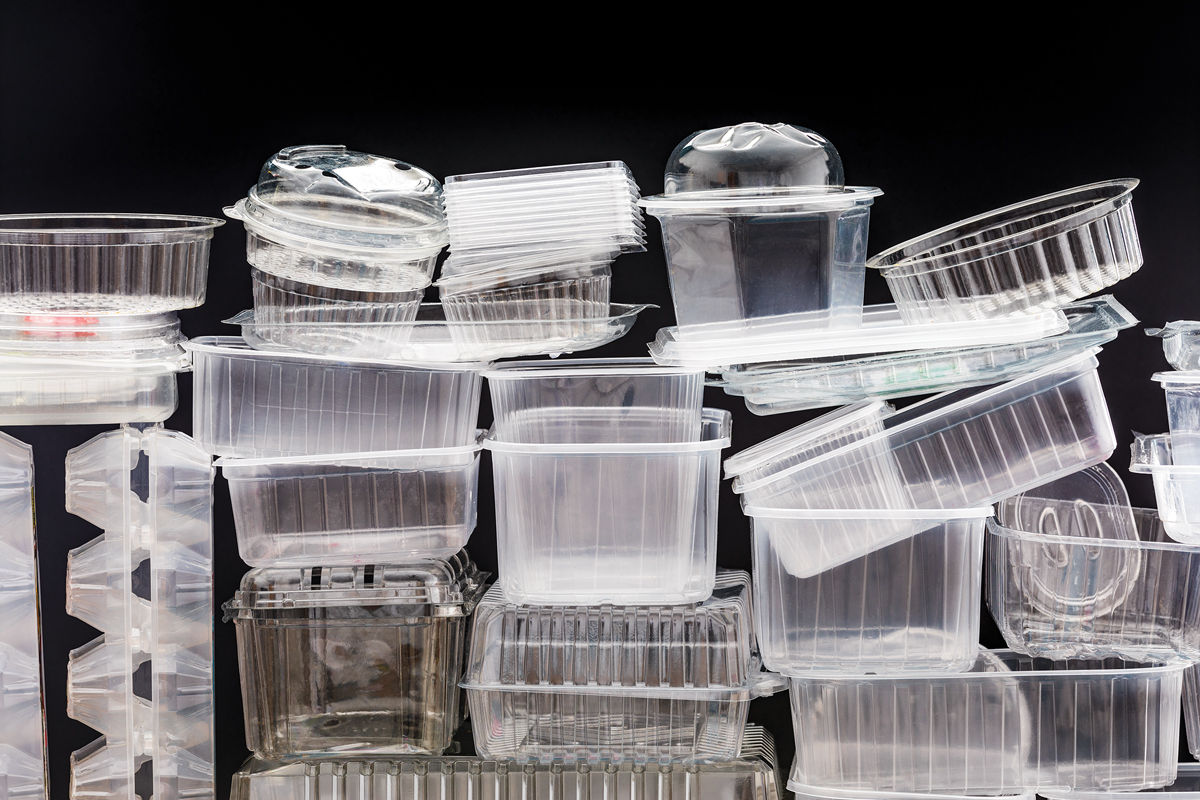
How to escape single-use containers, the scourge of takeout.
Single-use containers are the scourge of takeout. Here’s how to escape that.
- Arkansas Democrat-Gazette, July 5th, 2025
- By: MICHAEL J. COREN
What’s in your take-out order? Plastic. Lots of it. Most to-go food comes boxed, bagged or otherwise accompanied by petrochemicals. You ingest this unsavory stew with every bite, before the discarded packaging piles up in landfills.
So, over the past few months, I tried to eliminate plastic delivered to my door.
In my war with single-use containers, I notched a surprising number of victories against unasked-for cutlery and tubs destined for the trash. But total triumph proved as hard as you might imagine. Help may be on the way. Society is starting to recognize — as it did with lead, asbestos and other toxic materials before — that the drawbacks of single-use plastic may not be worth the convenience. An increasing number of cities are considering laws restricting or banning single-use plastic for food. Reusable container companies are proving that restaurants can save money by ditching the disposables, while delivering fresher, hotter food without the waste.
Systemic problems require systemic solutions, but you can resist the tide of plastic in your to-go meals. Here’s how I cut out (most of) the plastic in my food delivery and what we are going to need to do together.
A BRIEF HISTORY OF TAKEOUT FOOD CONTAINERS
Before plastic, there was clay. In ancient Rome, thermopolia, the fast food joints of their time, fed legions of imperial citizens in the streets out of earthenware bowls.
The modern history of take-out food packaging arguably began in 1894 with the patent for the “paper pail.” Cheap, durable and nearly leakproof, the origami-like invention (later adorned with a little red pagoda) helped usher in the 20th century’s obsession with food takeaway and delivery.
Plastics arrived after World War II, when the industry needed new customers to soak up a glut of manufacturing capacity. Single-use plastics for food packaging were inexpensive and endlessly modifiable — and soon ubiquitous.
The Foodservice Packaging Institute estimates that half of all prepared food today comes in plastic. But that might be an underestimate, since so much packaging is a blend of paper and polymers. Even the iconic paper pail often has a plastic or “forever chemical” coating to improve its leak resistance.
THE COSTS OF PLASTIC CONTAINERS
Our reliance on single-use plastics is not good for us or the environment.
Plastic production is fueling global warming, equivalent to the emissions from 116 average-size coal-fired power plants in 2020 in the United States alone.
And even if it’s used only once, plastic sticks around. Less than 6% is
effectively recycled in the United States. It takes centuries to break down into ever smaller particles.
Studies have found that nearly half of plastic litter in the ocean is composed of take-out food and drink containers, which regularly entangle and injure wildlife. Scientists have found some birds that have ingested so much plastic that they crunch when touched.
Plastic also messes with human bodies. The precise health consequences of the more than 10,000 chemicals that are used to make plastics are still under investigation. But the early evidence is disturbing.
First, plasticizers such as bisphenols (including BPA) and phthalates, used to soften plastics or avoid corrosion, appear to disrupt how the body orchestrates everything from neurodevelopment to reproduction. BPA is suspected of increasing obesity, decreasing fertility, and damaging the nervous and immune systems of children, according to the American Academy of Pediatrics. Similarly, phthalates have been linked to male fertility problems, obesity and ADHD, as well as over 350,000 heart disease deaths.
Then there are microplastics. Tiny shards of plastic are found in every organ of the human body, associated with maladies including lung cancer and colon cancer, as well as reproductive problems.
Avoiding these “everywhere chemicals” is impossible. They’re in the air we breathe, the water we drink and, of course, the packaging we consume.
But you can minimize your exposure. Sometimes all you have to do is ask.
MY ATTEMPT TO ELIMINATE PLASTIC IN TAKEOUT
Every time I ordered food delivery, I asked restaurants to avoid single-use plastic. I ordered from Thai, Mexican, Japanese and Italian restaurants (sometimes multiple times with different dishes). Most places, even if surprised by the request, tried to accommodate it, at least to some degree.
Many offered paper products to ferry food. Those can present their own set of problems if they are coated with PFAS, also known as forever chemicals, which have been linked to immune system suppression, lower birth weight and certain cancers. When I could, I asked for a thin layer of aluminum foil in hot dishes to prevent chemical leaching
If my order contained soups or liquids, I took my own container for pickup. Although health laws vary, every restaurant I visited was willing to use my bring-your own container.
Small plastic tubs for sauces and condiments were the biggest spoiler of an otherwise plastic-free experience.
The only unqualified success: DamnFine, a neighborhood pizza joint, delivered everything in a simple cardboard box. The only failure was my favorite Mexican restaurant, which uses plastic clamshells. We only dine in there now.
My experience was mixed with a family-style food delivery service in my area. They use black plastic tubs for delivery and reheating dishes (a very bad idea). Although they said they had tried alternatives in the past, they promised to renew their search. I wasn’t optimistic. But last month, they called to say they would soon be switching to all paper products, which can be heated in an oven.
Was it all worth it? I didn’t mind ditching some restaurants or spending a bit of extra time picking up my food in reusable containers, especially since I have two very young kids (among the most vulnerable to these contaminants).
But the point of food delivery is convenience. For most people, it has to be simple, cheap and easy.
Compostable bioplastics seem like an obvious solution. But only a small fraction of the country has access to compost facilities (and many won’t accept popular to-go packaging). Over their lifetime, bioplastics still demand more greenhouse gases, water and energy than reusable containers or even typical single-use plastic items.
The holy grail for the food industry is a fully reusable, toxin-free system that works for everyone at no extra cost. The challenge is reverse logistics: How do you collect, clean and redistribute thousands of containers to hungry customers at prices that beat 30-cent disposables?
GETTING REUSABLE CONTAINERS TO WORK
The big food delivery services are experimenting. DoorDash (where, full disclosure, a family member works) said it has delivered more than 50,000 orders in reusable containers in cities including Los Angeles and New York.
Uber Eats has also been running pilots around the world, with limited success, said Fay Al Qassar, who leads the company’s delivery sustainability efforts. “In every pilot, we end up with very, very small percentage return rates,” she said. For now, Uber is promoting restaurants that use sustainable packaging with a green badge in the app in Europe (and soon the United States).
For reuse to work, Al Qassar argued, the industry needs to coalesce around standard containers, shared infrastructure for washing and returns, and policies at the city or state level. “I do think the future, at some point, will inevitably have to be reuse,” she said. “The question is when does that future come and are we ready for it.”